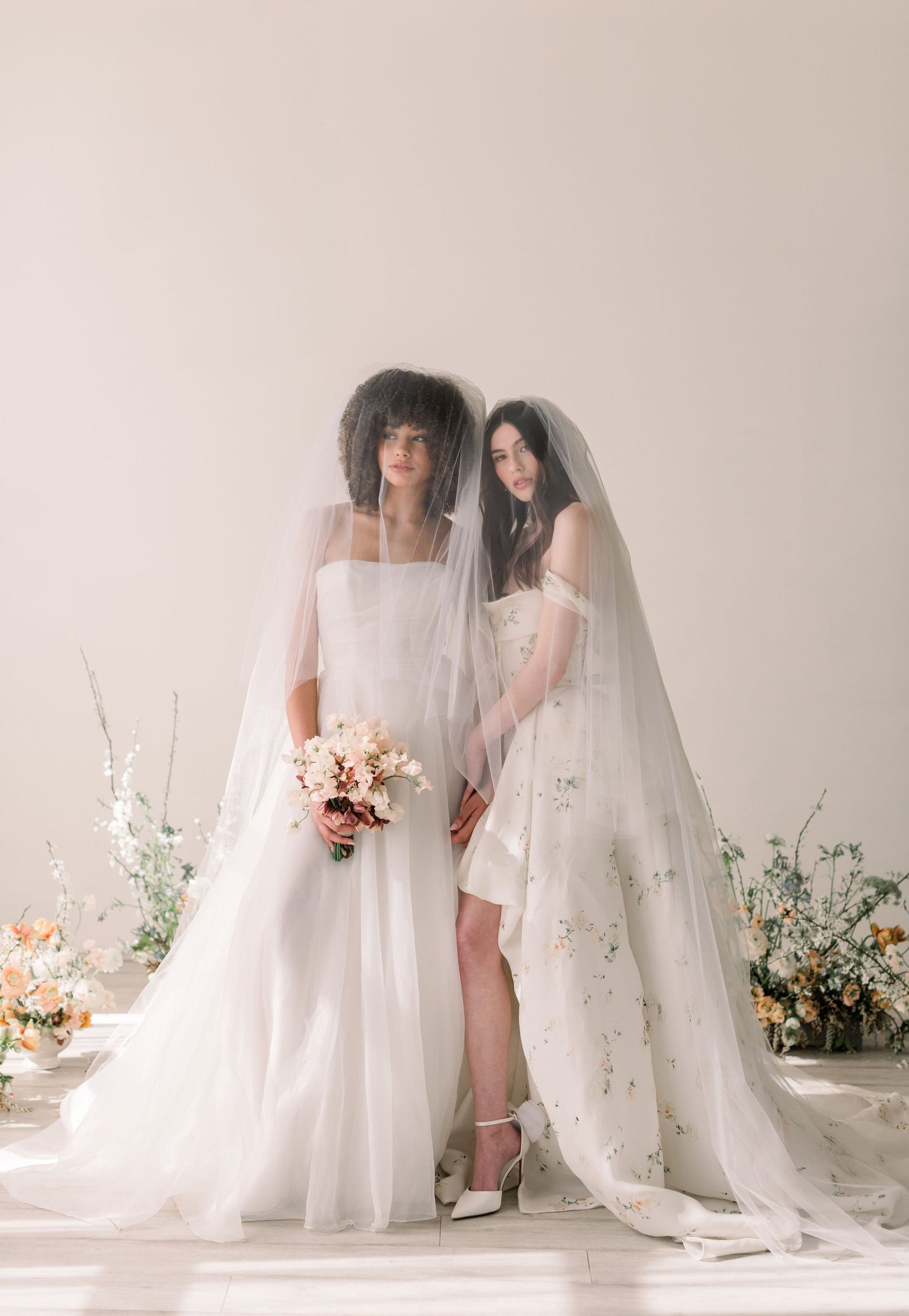


How to Choose the Perfect Wedding Veil Length
One of the most common questions brides ask is, "What veil length should I choose?" With so many options available, selecting the right wedding veil can feel overwhelming. From shoulder-length veils to dramatic cathedral styles, each length creates a different bridal look and complements different gown silhouettes.
The good news is that there is no right or wrong choice. The perfect wedding veil length is the one that makes you feel beautiful and confident on your wedding day.
Shoulder Length Veils (18"-20")
Shoulder length veils fall just below the shoulders and offer a classic, understated look. This shorter style works beautifully for brides who want a traditional veil without covering too much of their gown.
Best for:
-Courthouse weddings
-Reception looks
-Vintage-inspired styles
-Tea-length dresses
Elbow Length Veils (25")
Elbow length veils fall around the elbows and create a soft, romantic silhouette. This versatile length pairs beautifully with A-line and ball gown wedding dresses.
Best for:
-Classic bridal styles
-Garden weddings
-Dresses with detailed skirts
Waist Length Veils (35")
Waist length veils end around the waistline and allow the details of your gown to remain visible. This length offers elegance while maintaining a lightweight feel.
Best for:
-Modern bridal looks
-Dresses with statement backs
-Destination weddings
Fingertip Length Veils (45")
One of the most popular veil lengths, fingertip veils fall approximately to the bride's fingertips when her arms are relaxed at her sides. This universally flattering length complements nearly every wedding gown silhouette.
Best for:
-Most wedding dress styles
-Traditional ceremonies
-Brides seeking versatility
Waltz Length Veils (55")
Waltz veils create beautiful movement without extending into a train. They offer the drama of a longer veil while remaining easy to wear throughout your celebration.
Best for:
-Outdoor weddings
-Destination weddings
-Brides who want movement without excess length
Floor Length Veils (70")
Floor length veils gently touch the floor and create a timeless bridal look. They provide elegance without the extended train of a chapel or cathedral veil.
Best for:
-Traditional weddings
-Formal ceremonies
-Minimalist bridal gowns
Chapel Length Veils (90")
Chapel veils extend beyond the gown and create a soft, romantic train effect. This length is ideal for brides who want a dramatic look without the grandeur of a cathedral veil.
Best for:
-Formal weddings
-Church ceremonies
-Romantic bridal styles
Cathedral Length Veils (110")
Cathedral veils are among the most iconic bridal accessories. Their dramatic length creates breathtaking photographs and unforgettable aisle moments.
Best for:
-Grand venues
-Formal celebrations
-Statement bridal looks
Royal, Regal, Monarch & Supreme Length Veils
For brides seeking ultimate drama, extra-long wedding veils create an extraordinary statement.
-Royal Length: 130"
-Regal Length: 150"
-Monarch Length: 170"
-Supreme Length: 190"
These breathtaking lengths are perfect for luxury weddings, cathedral ceremonies, and dramatic bridal portraits.
How to Choose the Right Veil Length
When selecting a veil length, consider:
-Your wedding dress silhouette
-Your venue
-Your personal style
-Whether you want a dramatic or understated look
-The details on the back of your gown
Most importantly, choose a veil that feels like you. Whether you love a chic shoulder-length veil or a dramatic cathedral veil, the right choice is the one that makes you feel your most beautiful.
Find Your Perfect Wedding Veil
At Tessa Kim Bridal, our handcrafted wedding veils are available in a variety of lengths, fabrics, and styles to complement every bride. From fingertip veils and cathedral veils to dramatic monarch and supreme lengths, we believe every bride deserves a veil that feels uniquely her own.